

 Jaime Creates
 Pattern

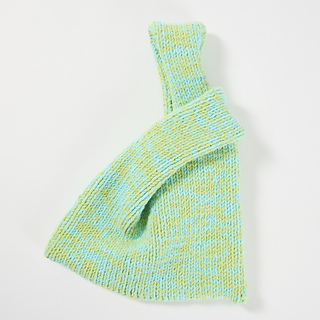
Double Trouble Knot Bag

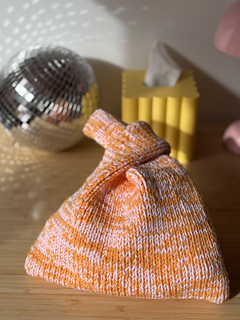
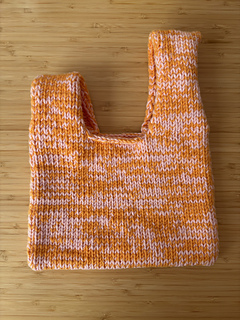
The Double Trouble Knot Bag is a knitted Japanese knot bag worked with two strands of yarn held double, resulting in a sturdy, durable fabric and creates a beautiful marled effect. The Japanese knot bag is a practical, everyday accessory that has been cleverly designed to have one long strap and one short strap. To close the bag, simply thread the long strap through the short one, and you can then wear it on your wrist. The Double Trouble Knot Bag pattern is beginner friendly and is easily customisable to suit your preferences.
This pattern has been designed specially for my brand new yarn range Springy, available exclusively at Spotlight stores in Australia, New Zealand and Singapore.
Skill Level: Confident beginner
Materials:
- 3 balls of Jaime Creates, Springy in Colour A
- 3 balls of Jaime Creates, Springy in Colour B
- 6-6.5 mm needles
- Stitch holder
- Tapestry needle
- Scissors
- Measuring tape
Gauge: 14 sts x 23 rows = 10cm x 10cm in stockinette stitch on 6-6.5 mm needles with 2 strands held together.
The gauge is intentionally very tight so as to ensure the fabric won’t be too stretchy and will maintain its shape/structure when used. Matching gauge (especially stitch gauge) is essential to ensuring your bag’s measurements are correct, so making a gauge swatch is strongly recommended. My sample was knit very tightly on 6.5 mm needles, however some testers struggled to meet gauge and needed to size down to 6 mm.
Finished Measurements:
Width: 28 cm
Length: 20 cm
Short strap length: 10 cm (folded)
Long strap length: 16 cm (folded)
Strap width: 10 cm
Lengths of both the bag and straps can easily be adjusted to suit your personal preference.
Construction:
The bag is worked flat in panels which are then seamed together. You will start by working the first panel. You will then pick up stitches along the cast on edge of the first panel to work the second panel followed by the straps. You will then use the vertical mattress stitch to join the sides of the panels and horizontal mattress stitch to attach the straps to the edge of the first panel.


6 projects
stashed 16 times
 stashed