

 LD Purls
 Pattern


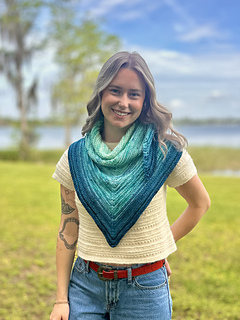
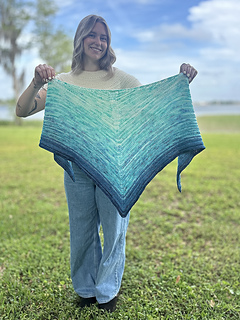
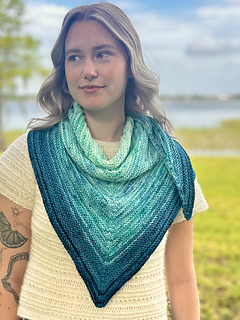
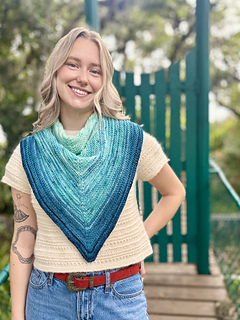
Tropical Dilemma DK

The DK version of my popular Tropical Dilemma shawl! For those that want a bit more warmth and a faster knit!
You can find the fingering weight version here. Add both to your cart and one will be free!
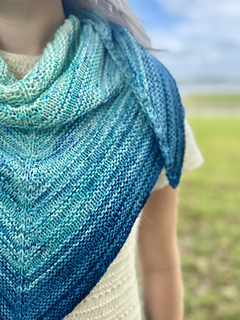
This gorgeous shawl is knit from the top down, beginning with a garter tab cast on. As you add increases to the spine and edges a triangular shape is formed. The simple repeat of knits and purl rows are memorizable and mediative, making this the perfect lazy day, knit night or Netflix project! Grab a kit of colorful yarn or use up bits from your beautiful stash. This shawl is all about letting the yarn do the heavy lifting so you can relax and enjoy!
Yarn
10 colors (20g) each of dk weight yarn or 500 total yards in as many or as few colors as you’d like.
Sample knit in:
Emma’s Yarn Simply Spectacular DK Theme pack in the color Aquarius.
(10) 50 yard/ 20g smalls of 75% Superwash Merino, 25% Nylon.
Needles and Notions
US Size 7 (3.75mm), 40 inch (100 cm) circular needle or size required for gauge.
2 stitch markers
Darning needle
Gauge
18 sts and 32 rows = 4 inches in stockinette, after blocking.
Finished measurements
Wingspan: 64 inches
Depth: 23 inches
Skill Level
Beginner friendly!
Notes
The shawl spine is maintained as a knit stitch. I’ve used two colors of ink, blue to indicate these “purl bump” rows and black to indicate stockinette rows, to serve as a visual guide to the pattern. My shawl begins with the lightest color in the kit and slowly progresses in intensity. It would be equally as beautiful to start with the darkest color and move to the lightest. After the first 44 rows new colors are introduced by alternating rows, creating a lovely melted blend. Be sure to add new colors on RS rows, it’s not necessary to start a new color at the beginning a row but I find it better for weaving in the ends later. Carry the non-working yarn up the side until indicated to cut. The bind off is done on the wrong side which creates a flat border.


 Ravelry download


 Cancel
797 projects
stashed 1343 times
 stashed