

 Tricot Meringue (website)
 Pattern


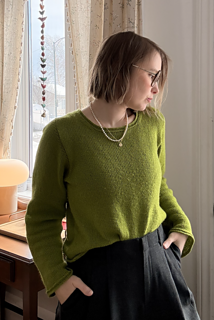


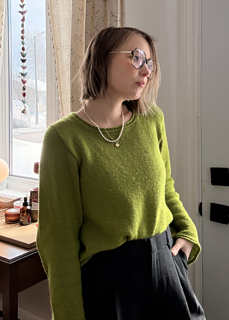

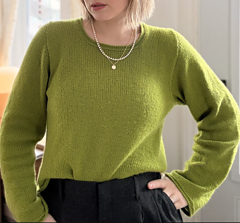
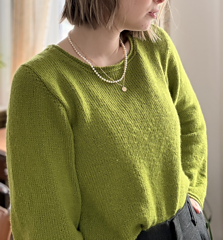

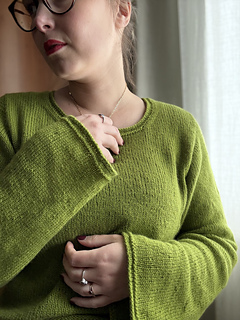
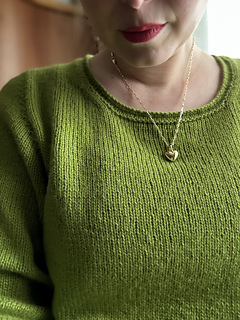
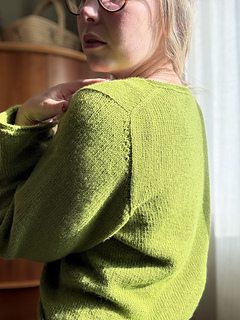
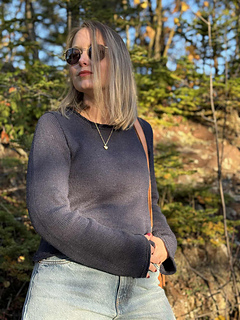
Willow Sweater


ENGLISH
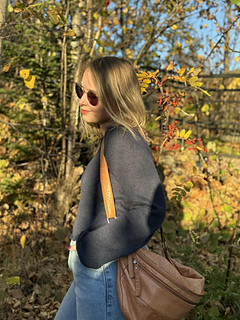
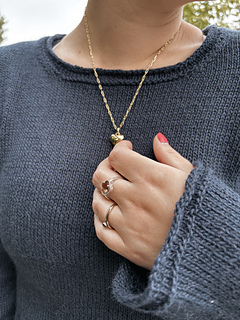
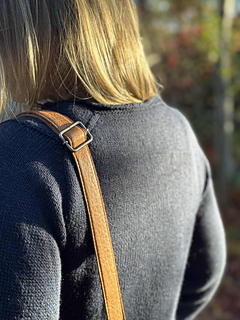
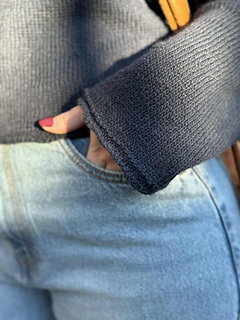
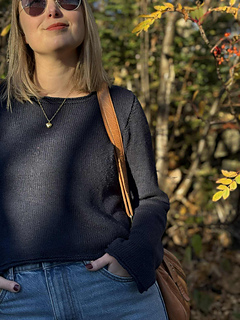
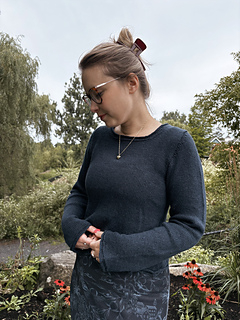
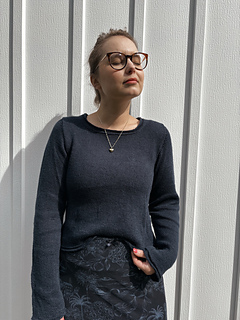
A sweater with timeless elegance, designed to transcend seasons and trends. Its classic set-in sleeve construction provides a clean fit and highlights the silhouette with understated sophistication. The rolled stockinette edges create a neat, refined finish for a polished, professional look. Available in cashmere for a soft and luxurious version, or in a linen blend for a light and breathable summer garment, this pattern adapts to every preference. Its chic and timeless style, subtly inspired by a touch of retro flair, makes it a wardrobe essential, just as enjoyable to knit as it is to wear.
SIZE GUIDE
The Willow Sweater is designed with approximately 5–7.5 cm 2–3 inches of positive ease, meaning the finished sweater should measure 5–7.5 cm 2–3 inches larger than your bust circumference. Choose your armhole depth according to your desired bicep circumference.
Sizes 1 (2) 3 (4) 5 (6) 7 (8) 9 (10) are designed to fit a bust circumference of: 82 (87) 92 (97) 104 (108) 117 (123) 136 (143) cm 32 (34) 36 (39) 42 (43) 46 (49) 54 (57) inches for a finished garment measuring: 87 (92) 97 (102.5) 109.5 (113) 122 (128.5) 141 (148) cm 34¾ (36¾) 39 (41) 44 (45¼) 48½ (51½) 56¼ (59) inches
The model in the photo wears size 2 for a bust circumference of 86 cm 34 inches, with 7 cm 2¾ inches of positive ease.
If you have a large difference between your upper bust and full bust, I recommend selecting your size based on your upper bust measurement for a better shoulder fit. You can later increase the stitch count under the armholes when joining in the round to size up if needed.
SIZES: 1 (2) 3 (4) 5 (6) 7 (8) 9 (10) BUST CIRCUMFERENCE: 87 (92) 97 (102.5) 109.5 (113) 122 (128.5) 141 (148) cm 34¾ (36¾) 39 (41) 44 (45¼) 48½ (51½) 56¼ (59) inches SWEATER LENGTH: 31 (31) 32 (32) 33 (33) 34 (35) 35.5 (36) cm or 12 (12) 12½ (12½) 12¾ (12¾) 13¼ (13¾) 13¾ (14) inches, measured from the underarm.
GAUGE: 23 stitches × 34 rows = 10 × 10 cm 4 × 4 inches in stockinette stitch after blocking, knitted in the round with 3.5 mm US4 needles.
NEEDLES: 3.5 mm US4 / 3.25 mm US3 Cables: 30, 40, 80 or 100 cm 12, 16, 32 or 40 inches
YARN: 9 (10) 10 (11) 12 (13) 14 (15) 15 (16) balls of Cardiff – Cashmere, 112 m – 25 g, for the green version. The sample is shown in color 725 Niwa. OR 6 (7) 7 (8) 8 (9) 9 (10) 10 (11) balls of Sunny Linen – Majo Garn, 150 m – 50 g for the blue version with a shallower armhole. The sample is shown in color 521 Navy. Add one extra ball for a deeper armhole.
OTHER YARN OPTIONS: Fingering-weight yarn that blooms well, sport-weight yarn that achieves the gauge, two strands of lace-weight held together or approximately: 950 (1050) 1150 (1250) 1350 (1450) 1550 (1650) 1750 meters. The yardage applies to each strand. For the shallower armhole version, you will need 150 m less.
NOTIONS: Tapestry needle, Stitch markers, Bulb-style stitch markers (that open and close)
SWEATER CONSTRUCTION
The sweater begins with the back. First, you will cast on stitches for the upper back, then knit the back flat while working increases to shape it. After placing the back stitches on hold, you will pick up the left and right shoulder stitches and work increases to shape the neckline. The front is then knitted flat. The final step of the yoke is to join the front and back. The body is then worked in the round. Next, the neck stitches are picked up and knitted in stockinette with a rolled edge finish. Finally, the sleeve stitches are picked up and worked in the round with decreases, finishing with the same rolled edge finish.
FRANCAIS
Un chandail à l’élégance intemporelle, pensé pour traverser les saisons et les tendances.
Sa coupe classique à emmanchure et manches montées offre une tenue impeccable et met en valeur la silhouette avec
sobriété. Les finitions en jersey anti-roulement apportent une belle netteté aux bords, pour un rendu soigné et professionnel.
Décliné en laine cachemire pour une version douce et luxueuse, ou en mélange de lin pour un porté estival léger et respirant, ce modèle s’adapte à toutes les envies. Son style chic et indémodable, inspiré d’une touche rétro, en fait un
indispensable du vestiaire tricoté, aussi agréable à réaliser qu’à porter.
TAILLES: 1 (2) 3 (4) 5 (6) 7 (8) 9 (10). CIRCONFÉRENCE DE BUSTE: 87 (92) 97 (102.5) 109.5 (113) 122 (128.5) 141 (148) cm
34 ¾ (36 ¾) 39 (41) 44 (45 ¼) 48 ½ (51 ½) 56 ¼ (59) pouces.
LONGUEUR DU CHANDAIL : 31 (31) 32 (32) 33 (33) 34 (35)
35.5 (36) cm ou 12 (12) 12 ½ (12 ½) 12 ¾ (12 ¾) 13 ¼ (13 ¾) 13 ¾ (14) pouces, mesurée à partir de sous l’emmanchure.
ÉCHANTILLON : 23 mailles x 34 rangs= 10 x 10 cm 4 x 4 pouces en jersey après blocage tricoté en rond avec les aiguilles
3.5 mm US4.
AIGUILLES : 3.5 mm US4 / 3.25 mm US3; câbles :30, 40, 80 OU 100 cm 12, 16, 32 OU 40 pouces.
MATÉRIEL : 9 (10) 10 (11) 12 (13) 14 (15) 15 (16) balles de Cardiff- Cachemire 112 m- 25g, pour la version verte. Le modèle porte la couleur 725 Niwa. OU 6 (7) 7 (8) 8 (9) 9 (10) 10 (11) balles de Sunny Linen- Majo Garn 150 m-50g pour la version bleue avec emmanchure moins profonde. Le modèle porte la couleur 521 Navy, ajoutez une balle supplémentaire pour une emmanchure profonde.
Autre option de choix de laine : Laine grosseur fingering qui gonfle bien, ou une laine grosseur sport qui obtient
l’échantillon, ou deux brins de lace tenus ensemble, ou 950 (1050) 1150 (1250) 1350 (1450) 1550 (1650) 1750 mètres. Le
métrage est applicable sur chaque brin. POUR LA VERSION EMMANCHURE MOINS PROFONDE, VOUS AUREZ BESOIN DE 150M DE MOINS.
ACCESSOIRES : Aiguille à laine, marqueurs de mailles et marqueurs de mailles de type ampoule (qui s’ouvrent et se
referment).
GUIDE DES TAILLES
Le Willow Sweater est construit pour avoir environ 5 à 7,5 cm 2 à 3 pouces d’aisance positive, soit 5 à 7,5 cm 2 à 3 pouces
plus large que votre circonférence de buste. Choisissez votre hauteur d’emmanchure en fonction de la circonférence au biceps voulu.
Les tailles 1 (2) 3 (4) 5 (6) 7 (8) 9 (10) sont donc conçues pour une circonférence de buste de 82 (87) 92 (97) 104 (108) 117
(123) 136 (143) cm 32 (34) 36 (39) 42 (43) 46 (49) 54 (57) pouces, pour un projet terminé d’une circonférence de 87 (92) 97 (102.5) 109.5 (113) 122 (128.5) 141 (148) cm 34 ¾ (36 ¾) 39 (41) 44 (45 ¼) 48 ½ (51 ½) 56 ¼ (59) pouces.
Le modèle sur la photo porte une taille 2 pour une circonférence de buste de 86 cm 34 pouces pour une aisance positive de 7 cm 2 ¾ pouces.
Si vous avez une grande différence entre votre haut de buste et votre buste, je vous recommande de sélectionner votre taille en fonction du haut de votre buste pour un meilleur tombé au niveau des épaules. Vous pouvez par la suite modifier le nombre de maille sous les emmanchures au moment de joindre en rond pour augmenter d’une taille.
EXPLICATION DE LA CONSTRUCTION DU CHANDAIL
La première étape consiste à construire le dos du chandail. Vous commencerez par monter le nombre de mailles pour le
haut du dos, puis tricoterez le dos à plat en créant des augmentations pour former le dos. Après avoir mis les mailles du dos en attente, vous reprendrez les mailles des épaules gauche et droite en augmentant pour le col. Le devant sera ensuite tricoté à plat. La dernière étape de l’empiècement consiste à joindre le devant et le dos. Le corps sera alors tricoté en rond. Les mailles du col seront ensuite reprises et tricotées en jersey finition anti-roulement. Les mailles des manches seront
reprises puis tricotées en rond avec des diminutions, pour finir avec une finition anti-roulement.


 Ravelry download


 Cancel
11828 projects
stashed 6130 times
 stashed
268 projects
stashed 170 times