

 Biscotte Yarns
 Pattern


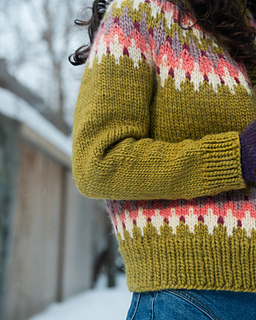
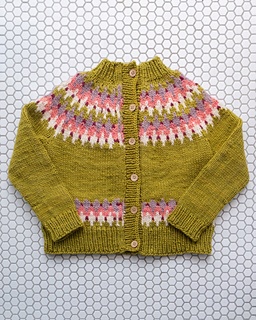
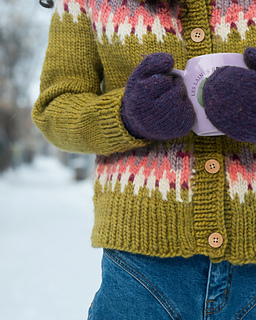
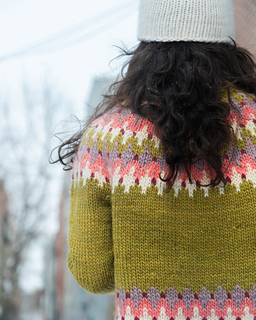
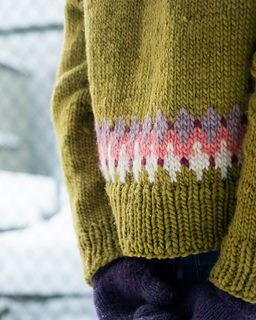
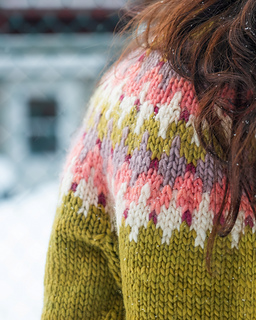
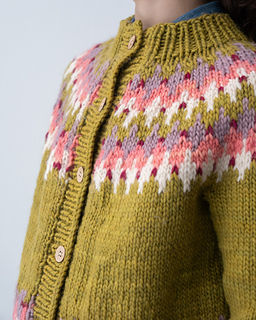
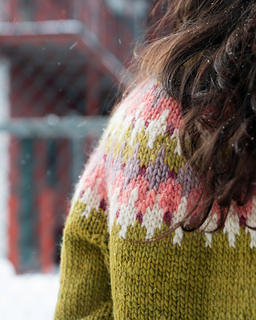
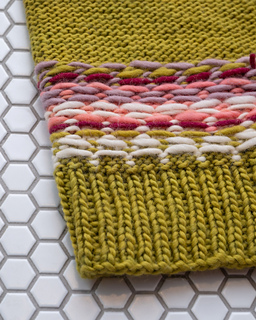
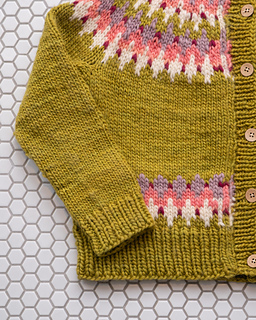
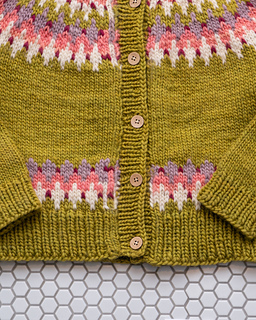
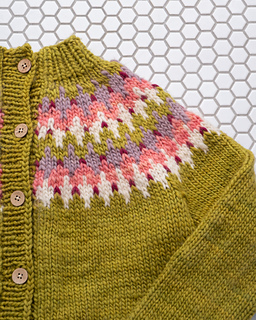
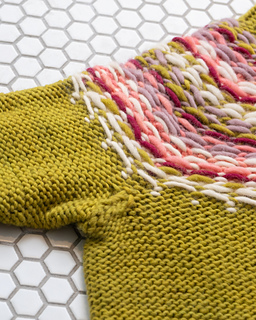
Pop Art


YARN
Louise Robert Collection HIGHLAND 100% Peruvian Highland wool; 110 m /100g in the following colors:
A – CANEVAS: 1 (1, 1, 1, 2) (2, 2, 2, 2) skeins or 58 (72, 82, 98, 113) (129, 146, 163, 179) meters.
B – MARIE-ANTOINETTE: 1 (1, 1, 1, 1) (1, 2, 2, 2) skeins or 49 (61, 69, 82, 94) (108, 123, 136, 150) meters.
C – POIRE: 4 (5, 6, 7, 8) (9, 10, 11, 12) skeins or 420 (523, 592, 706, 815) (932, 1060, 1180, 1299) meters.
D – CORAIL: 1 (1, 1, 1, 1) (2, 2, 2, 2) or 52 (65, 73, 87, 100) (115, 130, 145, 160) meters.
E – PATSY: 1 skein for all sizes or 15 (18, 20, 24, 28) (32, 36, 40, 44) meters.
NEEDLES
Main fabric: circular needles of 8 mm (US#11) – 100 cm (40 in) or longer cable (or the needle size required to obtain the gauge) and the type of needles preferred for knitting in the round on a small circumference.
Ribbing: circular needles of 6.5 mm (US#10.5) – 80 cm (32 in) or longer cable (or 1.5 mm smaller than the size required for the main knitting) and your preferred type of needles for knitting in the round on a small circumference.
ACCESSORIES
Stitch holder or waste yarn to hold the sleeve stitches.
Stitch markers x 2 (including 1 unique marker to identify the beginning of rounds).
Tapestry needle
Sewing needle and thread.
Buttons approximately 2.5 cm (1 in.) in diameter : 5 to 6 of your choice.
Ribbon approximately 2.5 cm (1 in.) wide x 80 to 150 cm (35 to 60 in.) long (optional).
GAUGE
14 stitches & 14 rows = 10 cm; 4 in. worked in stockinette stitch with the largest needles before blocking.
SIZES A (B, C, D, E) (F, G, H, I)
Final bust circumference: 88 (99, 108, 119, 128) (140, 149, 160, 169) cm; 34.5 (39, 42.5, 47, 51.5) (55, 58.5, 63, 66.5) inches with suggested ease of +/- 4 inches; 4 inches. Refer to the diagram at the end of the document for more details.
HOW TO CHOOSE YOUR SIZE: Measure your bust circumference, then choose a size that is 5 to 10 cm (2 to 4 in.) larger than your bust.
NOTES
CONSTRUCTION - This cardigan is worked entirely in the round, from the top down, using the steeking method to create the front opening.
STEEKING - The steek consists of 7 stitches at the center front of the knitting, corresponding to the beginning of the rounds. When working the colorwork pattern, do not weave in your ends in the center of these 7 stitches (or wait until after you have cut the steek to weave them in).
To secure the steek before cutting the front opening, you will find a tutorial with a video here: Biscotte.org/Steek. Once cut, the steek stitches are folded over and secured inside the knit using a thread and a sewing needle.
SHORT-ROWS - For a better fit, the depth of the back neckline is adjusted by a few short rows, worked using the German short-row technique. You will find a tutorial with a video here: Biscotte.org/GSR
La version française de ce patron se trouve sur LesLainesBiscotte.com


 Ravelry download


 Cancel
16 projects
stashed 28 times
 stashed