

 Esti Juango's Ravelry Store
 Pattern


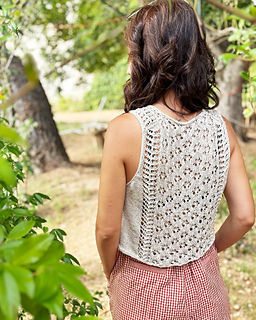
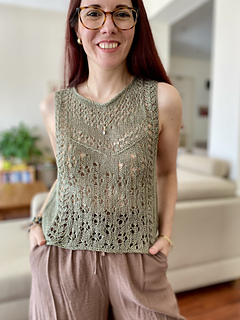
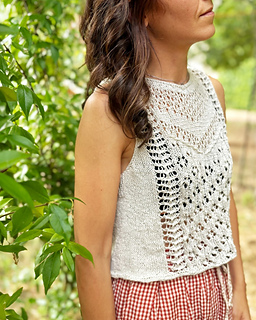
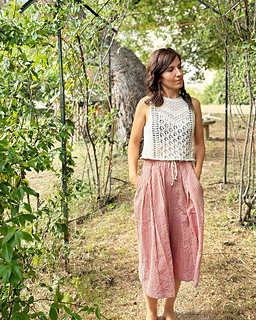
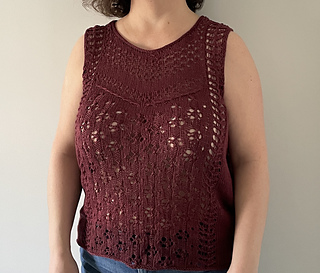
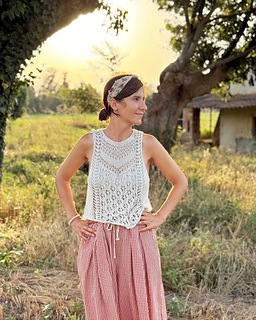
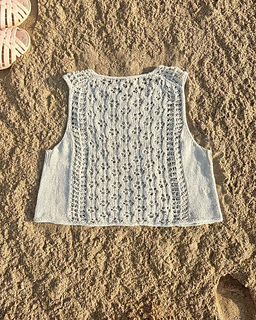
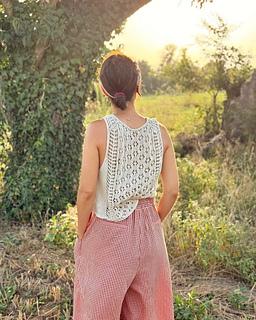
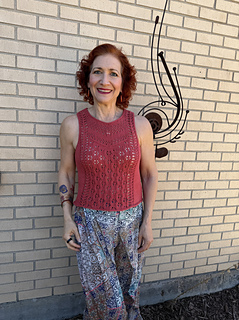
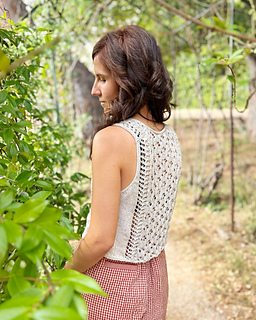
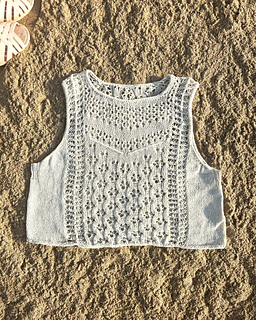
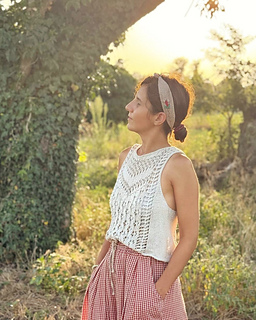
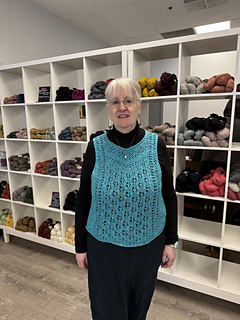
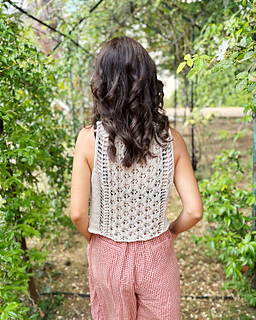
Palahi


Inspiration
Palahi is born from calm and grace, with a spirit that conveys serenity and quiet joy. Its name evokes peaceful walks under the sun, the murmur of the fields, and the silent understanding of a glance that says it all. Imagine gentle breezes, golden afternoons, and the warmth of something that always stays by your side.
Difficulty Level
Intermediate
What do you need to know?
To knit and purl, increase and decrease. To work in the round and flat. The back and front are charted and include row by row instructions. Support videos are provided for some stitches and techniques.
Sizes
1 (2, 3, 4, 5) ( 6, 7, 8, 9) with final bust circumference measurement of the top after blocking of 83 (93, 103, 113, 123) (133, 143, 153, 163) cm/ 32.75 (36.5, 40.5, 44.5, 48.5) (52.25, 56.25, 60.25, 64.25)”. A positive ease of 10-15 cm/ 4-6” is recommended.
Materials
- Yarn: Knitting for Olive, Pure Silk. 50 gr; 250 m (273 yds). 100% Seda Bourette. Color: Putty
- Amount: 2 (2, 2, 3, 3) (3, 4, 4, 4) balls
- Total in m: 500 (500, 500, 750, 750) (750, 1000, 1000, 1000) m
- Total in yds: 546 (546, 819, 819, 819) (819, 1092, 1092, 1092) yds
- Other yarn suggestions
- 3,25 mm (US 3) circular needles for top
- 3 mm (US 2.5) circular needles for neckline finishing
- 4 Locking markers and 4 normal markers
- Waste yarn or stitch holders
- Tapestry needle
Gauge
In a 10x10 cm (4x4 in) gauge you should have 21 sts and 30 rounds worked in lace stitch (for example, the central stitches on the back) with larger needles. Block the swatch for measuring. (Watch video).
Construction notes
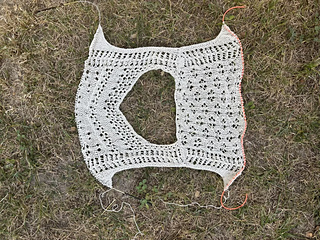
The top starts at the back. It is knitted starting at the back of the neck and working down to the armholes. The stitches are then picked up to knit the front from the top-down. Neckline is shaped while knitting lacework chart to the armholes.
Front and back are then joined and worked in the round to desired length. The neck opening is finished off. The arms edges will gradually generate an i-cord finish as you knit it.
The pattern consists of the following sections:
Back
1.1 Cast on to shoulder width and straight knitting
1.2 Armhole increases to reach bust width
Front
2.1 Left front shoulder
2.2 Right front shoulder
2.3 Join fronts
Join back and front, work in the round
Finishings
------Español/ Spanish-----
Inspiración
Palahi nace de la calma y la nobleza, con un espíritu que transmite serenidad y alegría serena. Su nombre evoca paseos tranquilos bajo el sol, el rumor de los campos y la complicidad silenciosa de una mirada que lo dice todo. Imagina brisas suaves, tardes doradas y la calidez de algo que te acompaña siempre.
Nivel de Dificultad
Intermedio
Requisitos previos
Saber tejer derecho, revés, hacer aumentos y disminuciones por el lado derecho y revés de la labor. Tejer en circular. Se incluye un esquema del calado del delantero y trasero. También las instrucciones escritas del esquema. Hay una descripción detallada de cada punto y videos de apoyo.
Tallas
1 (2, 3, 4, 5) ( 6, 7, 8, 9) con contorno de pecho en prenda bloqueada de 83 (93, 103, 113, 123) (133, 143, 153, 163) cm. Se recomienda una holgura positiva de unos 10-15 cm.
Materiales
- Hilo: Knitting for Olive, Pure Silk. 50 gr; 250 m (273 yds). 100% Seda Bourette. Color: Putty
- Cantidad: 2 (2, 2, 3, 3) (3, 4, 4, 4) ovillos
- Total en m: 500 (500, 500, 750, 750) (750, 1000, 1000, 1000) m
- Sugerencia de otras lanas
- Agujas circulares de 3,25 mm para el top
- Agujas circulares de 3 mm para el cuello
- 4 marcadores tipo imperdible y 4 normales
- Imperdible o hilo adicional para dejar puntos en espera
- Aguja lanera
Tejido de Muestra
En una muestra tejida en circular de 10 x 10 cm en punto calado (por ejemplo, los puntos centrales del trasero) obtendrás 21 puntos por 30 vueltas con una aguja de 3.25 mm.
Notas de construcción
La prenda se inicia en la parte trasera. Se teje iniciando en la parte trasera del cuello hacia abajo hasta llegar a la sisa. Se recogen los puntos para tejer la parte delantera de arriba abajo. Se da forma al escote y se trabaja el calado simultáneamente hasta llegar al bajo de la sisa.
Se une el delantero y trasero y se trabaja en circular hasta la longitud final deseada. Se remata el cuello, ya que en los brazos se irá generando una terminación en i-cord conforme lo vas tejiendo. El patrón consta de las siguientes secciones:
Trasero
1.1 Montaje de puntos hasta alcanzar anchura de hombros y tejido recto
1.2 Curvatura de sisa hasta alcanzar anchura pecho
Delantero
2.1 Hombro delantero izquierdo
2.2 Hombro delantero derecho
2.3 Unión delanteros hasta sisa
Unión delantero y trasero. Tejer en circular
Acabados


 Ravelry download


 Cancel
24997 projects
stashed 14517 times
 stashed