

 Savory Knitting
 Pattern


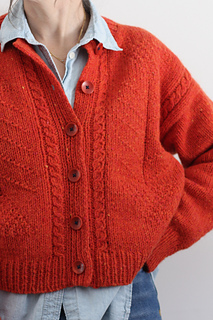
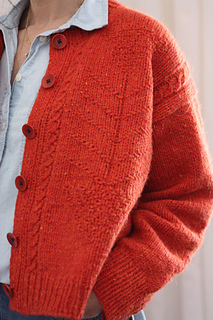
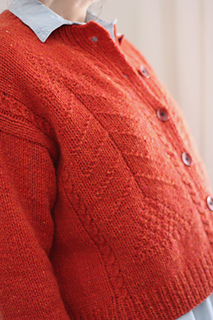
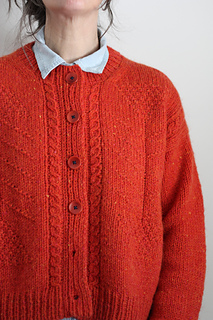
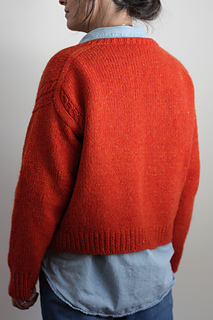
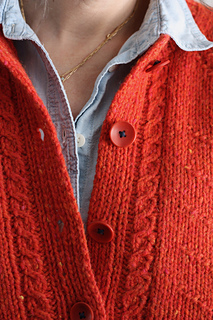
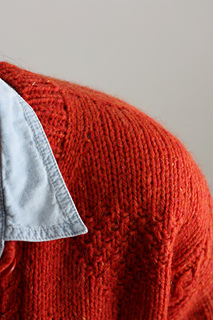
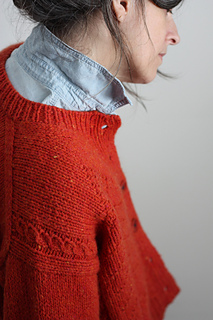
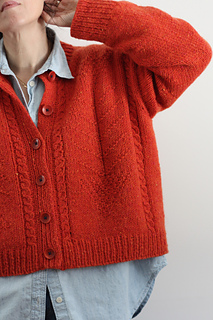
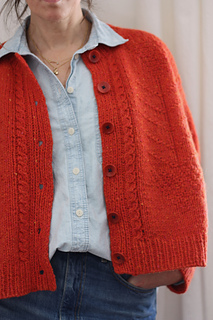
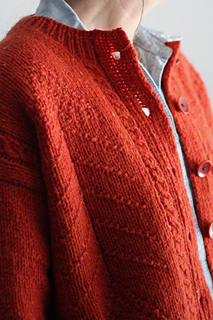
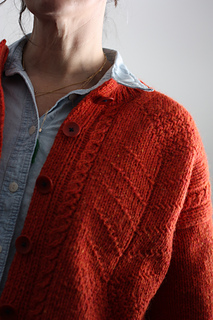
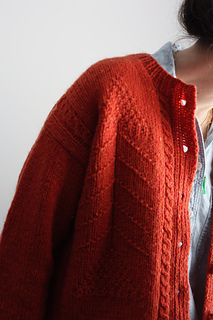
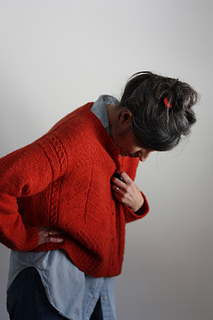
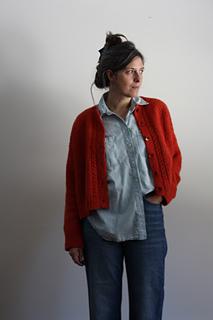
Herringbones Cardigan

Save 20% on all Savory Knitting patterns with coupon code “Herringbones” now through end of day 2/8/2026
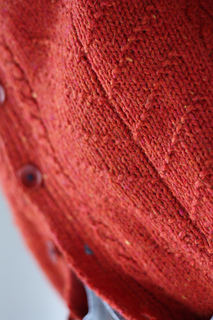
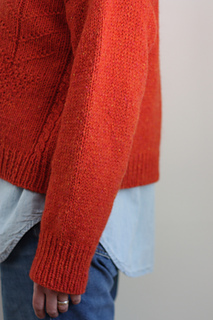
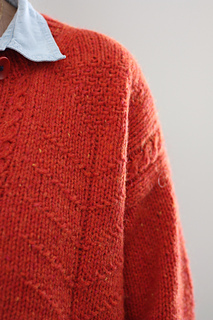
The Herringbones cardigan is worked from the top down. The cardigan begins by casting on the neck back, working shoulder shaping and then down to the underarm. The fronts are picked up from the shoulders and worked down to match the back. The fronts and back are then joined and worked in one piece to the end. The sleeves are picked up and worked down in the round. The vertical button band is worked separately and sewn on; you may choose to work a horizontal button band instead. The fronts and back feature a cable detail and the fronts each have a Gansey-inspired knit/purl textured Herringbones motif. The cable patterns are written. The Herringbones patterns are charted.
MATERIALS
Yarn
(800, 875, 925, 1000, 1100) (1200, 1300, 1400, 1500, 1600) yards/ (730, 800, 845, 915, 1000) (1100, 1190, 1280, 1370, 1460) meters Aran weight yarn.
Shown in: Peace Fleece Worsted (75% Navajo Rambouillet and Domestic Fine Wool 25% Mohair; 200 yards/182 meters/113g): “Sakhalin Salmon” (4, 5, 5, 5, 6) (6, 7, 7, 8, 8) skeins.
This cardigan is designed for classic woolly aran weight yarns that show texture well. It would also work beautifully in a DK/worsted weight yarn carried with a lace weight mohair yarn. You can use any yarn that achieves gauge and has good stitch definition.
Needles
US 8/5mm: circular 32”/ 80 cm or longer for body and double pointed needles (or preferred needles for knitting a small circumference) for sleeves.
US 6/4mm: circular 32”/ 80 cm or longer for hem, collar, button bands and double pointed needles (or preferred needles for knitting a small circumference) for sleeve cuffs.
Adjust needle size to achieve gauge
Notions required
6 1”/ 25mm buttons, 3 stitch markers: 2 movable stitch markers for marking rows and 1 for marking the beginning of round, tapestry needle for sewing the front bands and weaving in ends.
A cable needle for is optional as well as clips or waste yarn for basting the front bands before sewing.
GAUGE
15 stitches and 21 rows = 4”/ 10 cm in stockinette stitch using larger needle
FINISHED MEASUREMENTS
Sizes
(1, 2, 3, 4, 5) (6, 7, 8, 9, 10)
(36, 40 1/2, 43 1/2, 47 3/4, 52) (55 1/4, 59 1/2, 63 3/4, 68, 72 1/4)“
(91.5, 102.5, 110.5, 121, 132) (140, 151, 162, 172.5, 183.5) cm
Choosing a size
Choose the size with a finished measurement that is 4-12” larger than your actual chest measurement. Measure around the chest above the bust being sure to keep the measuring tape level and take a deep breath for accurate measurements. If your full bust is more than 5”/13 cm larger than your chest measurement use the average between your bust and your chest measurement or consider adding bust darts.
This cardigan has a classic boxy cut and is intended to have a relaxed fit. How much ease to choose is very personal. It depends on your personal style and how you intend to wear your cardigan. I went with a size 4 which is roughly 11” larger than my actual chest measurements for a jacket-like fit that would I could wear layered over an oversized button down shirt or a lighter sweater. Either the size 2 or 3 would have also worked but would have given me a more traditional fit. If you are not sure how much ease is right for you, measure a relaxed fit sweater or sweatshirt that you like the fit of across the chest from seam to seam at the widest point (or arm pit to armpit) and choose the Herringbones size that is the closest match.


 Ravelry download


 Cancel
13211 projects
stashed 8687 times
 stashed
4003 projects
stashed 3583 times
3697 projects
stashed 3212 times
373 projects
stashed 238 times
376 projects
stashed 353 times
1058 projects
stashed 884 times
164 projects
stashed 100 times